WELCOME TO SEASON 8 OF BUSINESS OF CRAFT
Welcome to Business of Craft, a show designed to help entrepreneurs with fabric or fiber businesses become more successful.
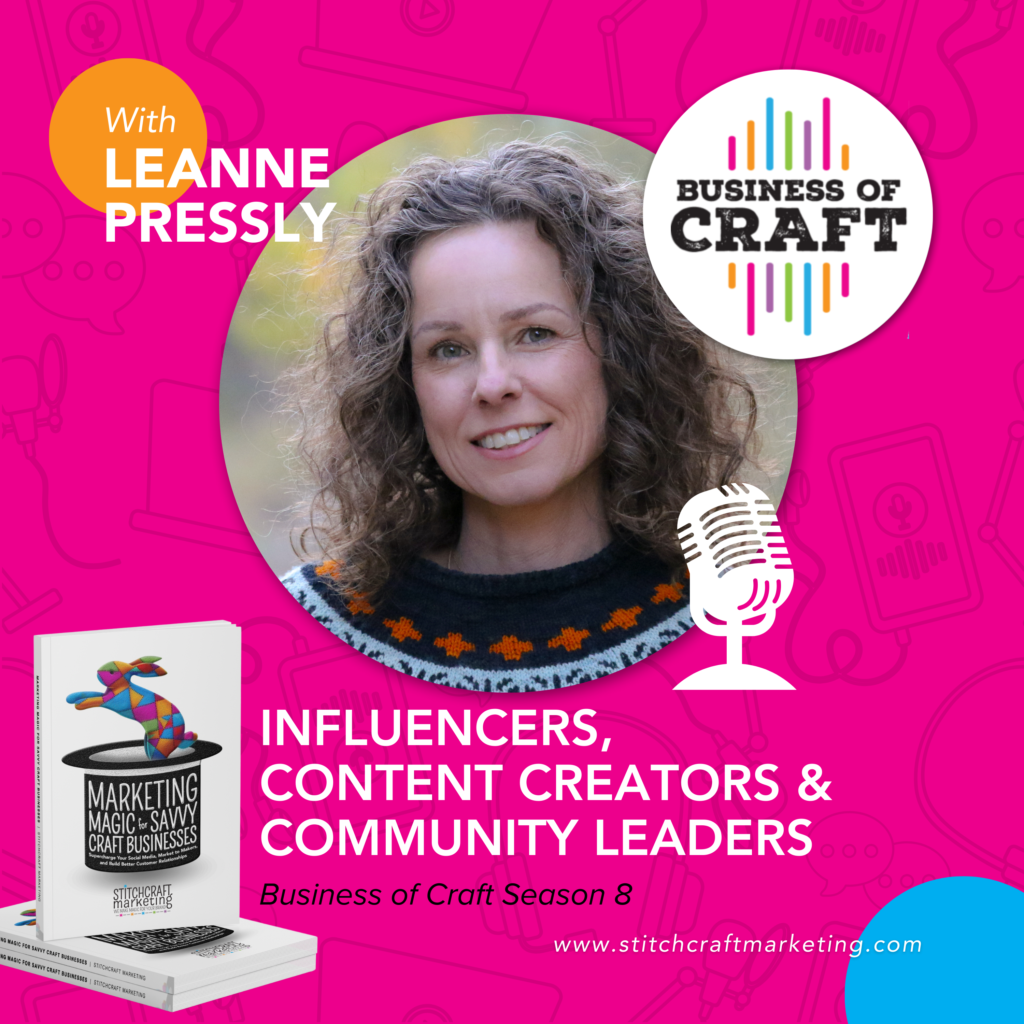
This is our 8th season of BOC and today we have another solocast to cover one of the topics in our new book, Marketing Magic for Savvy Craft Businesses. I’m super proud of this book which my whole team wrote in 2025. The book is available for sale in Kindle and print version (and soon to be audio) on our website or Amazon.
Listen to the Show:
Listen to it on Spotify, iHeartRadio, iTunes, and PlayerFM, or catch the video version on YouTube.
Thank you for taking the time to listen! If you’re enjoying the show, it’s safe to assume there are others out there like you who would also enjoy the show. Help them find it by leaving a review on your favorite podcast platform. Don’t forget to subscribe to stay on top of the latest episodes!
Today we’re diving into a topic that has completely reshaped modern marketing—influencer and content creator partnerships.
We call this chapter “Alchemical Alliances,” because when you find the right content creator or influencer, it truly feels like magic. Let’s break down what you need to know to create those powerful partnerships that can elevate your brand.
In the craft industry, “influencer” used to conjure up thoughts of big celebrity names. But today, it seems like more people are using the word content creator but today I’ll use them interchangeably.
At Stitchcraft, we categorize content creators into two groups:
- In the traditional sense, A content creator or influencer is someone who’s built a following with a specific community. You know how much I preach about the Know Like Trust funnel and this concept really comes into play here because influencers have gained a huge amount of trust with their audience.
- User-Generated Content (UGC) is content made by fans or customers—blogs, reels, posts, videos—that features your brand organically.. This might just be one of your customers posting a quilt they made or a photo of your yarn they like.
A couple more vocab words here:
Nano-influencers have 1,000–10,000 followers.
Micro-influencers have 10,000–100,000.
Of course you have your MACRO influencers but we rarely see those folks in our industry.
And the data is clear—smaller is smarter. 44% of brands say nano-influencers offer the best results.
Why? Because trust is everything. Their communities are tighter, their interactions more meaningful, and their followers are genuinely engaged. They have an authenticity that resonates.
According to the 2024 Influencer Marketing Benchmark Report, a big shift is happening.
45% of brands now prioritize user-generated content over sales or even awareness.
Think about it: a single influencer campaign can spark a chain reaction of UGC from their followers, which inspires more content, which builds more trust… and eventually, more sales.
And if you’re worried about authenticity, here’s the truth: most quality creators won’t promote something they don’t believe in. Their audience would sniff that out instantly.
If you’re new to this, start by reviewing your social media followers:
- Who’s tagging your brand?
- Who’s already posting about you?
- Do they have a public profile and active community?
- Go to trade shows and go to meetups.
Once you’ve found a few good candidates, approach them with a clear strategy or ask them if they already have a program outlined where they pitch YOU on what they can offer?
You could:
- Have them promote a new product or host a giveaway.
- Co-create tutorials or product reviews.
- Offer influencer-exclusive discount codes or limited-edition items.
- Work with the audience they have, not necessarily what your avatar is. Are they budget minded for example?
- Create a beauty sheet. We can help with that.
💡 Pro tip: Smaller influencers may work for product trades, gift cards, or affiliate links. But as you grow, be prepared to offer compensation that matches their time and audience reach.
Here’s where the strategy kicks in. Influencer marketing isn’t “set it and forget it.” Track your results just like you would with paid advertising.
Use tools like http://bit.ly , UTM tracking, and influencer-specific codes to measure impact. Also, monitor engagement—likes, comments, and shares matter just as much as sales.
Here’s a word of caution: not all influencers are created equal. Watch out for:
- Excessively branded content
- Lack of organic engagement
- No audience interaction
If every post is #sponsored and they’re not replying to comments, that’s a red flag.
You want people who feel real, are invested in the community, and genuinely like your products.
When done right, influencer partnerships feel less like advertising and more like conversation. They build community, inspire creativity, and shine a light on what makes your brand unique.