
Why Your Promotion Probably Failed Before It Started: A Timeline Guide for Craft Business Owners
You had a great sale. Genuinely good discounts, beautiful products, real value for your customers. And yet, it landed with a thud. A few orders trickled in, engagement was quiet, and you found yourself wondering why nobody seemed to care.
Here’s the hard truth: in most cases, a promotion doesn’t fail because the offer was wrong. It fails because the timeline was wrong. Specifically, it started too late—and by the time your audience knew it existed, the moment had already passed.
Planning the content of a promotion is the part most business owners focus on. Planning the timeline of a promotion is the part that actually determines whether it works. Let’s walk through exactly how to build a promotional timeline that gives every sale, product launch, or seasonal campaign the runway it needs to succeed.
We’ll use a holiday sales promotion as our main example throughout, but this framework applies equally to a new pattern release, a trunk show, a class registration opening, or any other moment in your business that deserves a strategic push.
Start With This Mindset Shift
Most small business owners start thinking about a holiday promotion in late October or early November. By that point, your competitors have already been planning for weeks. Your audience has already started making gift lists. And the advertising platforms you’d want to use to reach new customers are already getting more expensive as bigger brands flood the market with spend.
The single most impactful change you can make to your promotional strategy is to simply start earlier than feels necessary. What follows is the framework for doing exactly that.
The Promotional Timeline: A Phase-by-Phase Breakdown
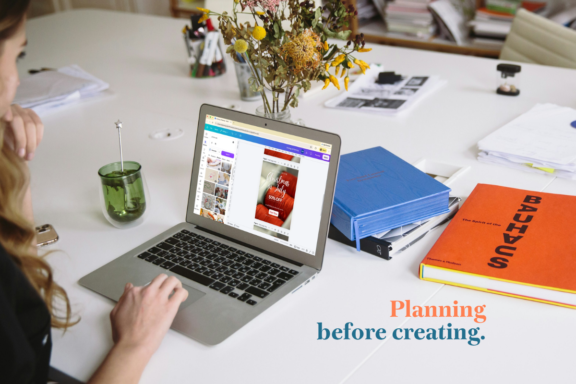
Eight to Ten Weeks Out: Strategy and Planning
This is the phase most business owners skip entirely—and it’s the most important one.
Before a single photo is taken or a graphic is designed, you need clear answers to a set of foundational questions. What exactly is the promotion? What products or services are included? What is the offer—a percentage discount, a gift with purchase, a bundle, free shipping, early access for loyal customers? Who is the primary audience you’re trying to reach, and is it your existing community, new customers, or both? What does success look like, and how will you measure it?
For a holiday promotion specifically, this is also the moment to look at last year’s data if you have it. What sold? What didn’t? What did your audience respond to? What was your best-performing content in Q4? Let that inform what you lead with this year.
This phase should also include a content audit. Do you have the photography you need, or does it need to be created? Do your graphics templates need refreshing? Is your website product page ready, or does it need to be built? Answering these questions now—not three weeks from now—is what prevents the frantic scramble that kills so many promotional timelines before they start.
Deliverables for this phase: A written promotion brief that outlines the offer, the audience, the timeline, the platforms, the budget, and the key messages. Everything that comes after this is built on that document.
Six to Eight Weeks Out: Photography and Creative Production
Once the strategy is locked, creative production begins, and it needs to begin earlier than feels comfortable if you want everything ready in time.
For product-based businesses, this is when product photography needs to happen. And we don’t just mean a quick snapshot—we mean the styled, well-lit, intentional photography that will anchor your promotional graphics, your social content, your email headers, and potentially your paid ads. For a holiday promotion, that means thinking about seasonal styling, gift context, and the emotional tone you want the imagery to carry. Cozy? Festive? Sophisticated? The photography sets the entire visual mood of the campaign and needs to be decided and executed well before the design phase begins.
For class-based or experience-based businesses, this is when you capture the in-room atmosphere—the hands working, the finished objects, the community feel—that will communicate to prospective students what they’re signing up for.
Once photography is complete or sourced, graphic design begins. Promotional graphics, email templates, social post templates, any printed in-store materials, and paid ad creative all need to be designed with enough time for revisions. Rushing design is one of the most common and most avoidable causes of a promotion feeling visually inconsistent or off-brand.
Deliverables for this phase: A complete creative asset library—photography, graphics, and templates—ready to be deployed across all planned channels.
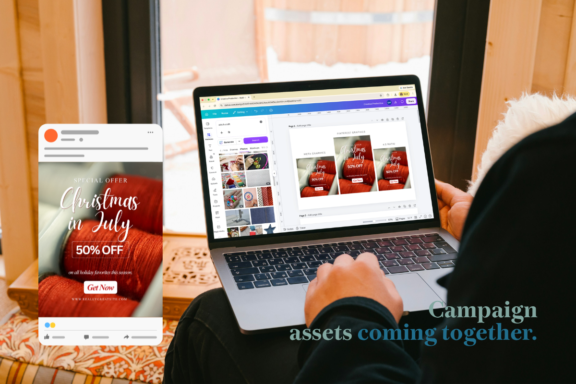
Four to Six Weeks Out: Audience Building and Paid Media Warm-Up
Here is where a lot of small craft businesses leave significant money on the table, because they don’t realize that paid advertising needs a warm-up period to work efficiently.
If you plan to run paid social ads during your promotion, you cannot simply turn them on the day your sale launches and expect immediate results. Platforms like Meta and TikTok need time to learn who your best customers are, optimize delivery, and exit what the industry calls the “learning phase.” Launching cold ads into a high-competition period like the holiday season—when advertising costs are at their annual peak—without that foundation in place means you’re paying premium prices for underperforming results.
The solution is to start running low-cost awareness and audience-building campaigns four to six weeks before your promotion launches. These campaigns aren’t designed to sell anything yet. They’re designed to build the warm audience—website visitors, video viewers, profile engagers, email list subscribers—that your promotional ads will retarget when the time comes. You’re essentially filling a funnel now so you have a pool of warm, interested people to market to when your sale goes live.
For a holiday promotion, this means your awareness content and warm-up ads should be running by mid-to-late October at the latest, so your retargeting audience is robust, and your algorithm has had time to learn before Black Friday to Cyber Monday competition drives costs up sharply.
Deliverables for this phase: Active awareness campaigns running, retargeting audiences building, ad creative tested and performing.
Three to Four Weeks Out: Begin Talking to Your Organic Audience
This is when your promotion starts to exist publicly, but not as a hard sell. Think of this phase as building anticipation rather than making an ask.
Start weaving references to the upcoming promotion into your organic social content. A “something exciting is coming” post. A behind-the-scenes look at products that will be featured. A “mark your calendar” story. An email to your list letting them know to watch for something special. None of this reveals the full offer yet—it just signals to your warmest audience that something worth paying attention to is on the way.
For product launches specifically, this is the ideal phase to introduce teaser content: a close-up of a new colorway without full context, a corner of a new pattern design, a sneak peek that rewards your most engaged followers with early information and builds curiosity in everyone else.
This phase also serves a practical algorithmic purpose. Platforms like Instagram and TikTok reward accounts whose content generates early engagement of saves, shares, comments, and replies. Seeding anticipation content now means your audience is primed and engaged heading into the launch window, which helps your launch content perform better when it matters most.
Deliverables for this phase: Teaser content live across organic social channels, email teaser sent to list, paid warm-up campaigns continuing.
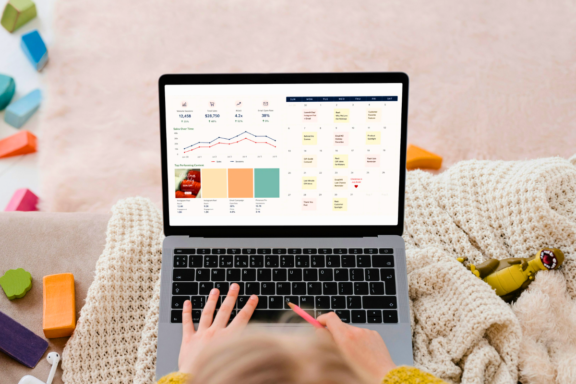
One to Two Weeks Out: Full Launch Announcement and Promotional Push
This is the moment the promotion goes fully public—and it should feel like a moment, not just a post.
Your launch content should be your strongest creative of the entire campaign. Lead with your most compelling imagery, your clearest value proposition, and a direct and easy path to action. Every platform your business lives on should reflect the promotion consistently—your social profiles, your link in bio, your email, your website homepage or banner, your in-store signage if you have a physical location.
For holiday promotions in particular, a launch email to your list on the first day of the sale consistently outperforms any other single piece of promotional content. Your email list is your warmest audience—these are people who have already opted in to hear from you—and they should be the first to know and the most richly informed.
Your paid campaigns should now shift from awareness to conversion, retargeting the warm audiences you spent the last several weeks building with direct promotional messaging and clear calls to action.
Plan for multiple touchpoints throughout the promotional window—not just a launch post and a final reminder. A mid-promotion highlight of a best-seller, a customer review or UGC feature, a “these are going fast” urgency post, and a clear end-date reminder all serve to maintain momentum across the full campaign period without feeling repetitive.
Deliverables for this phase: Full promotion live across all channels, conversion ads active, email sequence deployed, consistent posting cadence maintained throughout the window.
During and After: Don’t Go Silent
Two mistakes are extremely common once a promotion is live. The first is going quiet—launching with energy and then posting sporadically for the rest of the promotional window. The second is disappearing entirely once the sale ends, with no acknowledgment of what just happened.
Both are missed opportunities.
During the promotion, maintain a consistent presence. Share customer responses. Highlight specific products. Create urgency around end dates. Keep the energy up.
After the promotion closes, take a beat to thank your audience genuinely for their support, for their purchases, for their patience if anything went imperfectly. Then, within a week or two, do a brief internal review. What worked? What didn’t? What would you start earlier next time? Document it while it’s fresh. That debrief becomes the foundation of next year’s planning phase—and next year, you’ll start even better prepared.
The Short Version
If you take nothing else from this piece, take this: the success of your next promotion is largely determined by decisions you make weeks before it launches. The offer matters. The creative matters. But the timeline is what gives everything else a fighting chance.
Start earlier than feels necessary. Build your audience before you need them. Warm up your ads before the competition heats up. Tease before you tell. And treat the planning phase with the same seriousness you give the sale itself.
Your customers are out there. They just need enough time to find you before the moment passes.
One More Thing: Working With an Agency Changes These Timelines
If you’re working with a marketing agency, like us, it’s important to understand that the timelines outlined above represent the minimum runway for a business managing their own marketing in-house. When you add an agency into the equation, those windows expand, and for good reason. Before we can build a single graphic, schedule a single post, or launch a single ad campaign on your behalf, we need information, assets, and approvals from you. That means strategy briefs need to be reviewed and signed off. Photography needs to be in our hands—not in progress, not almost ready, but delivered and approved—before design can begin. Copy needs to be reviewed and approved before anything goes live. Ad budgets need to be confirmed before campaigns can be built. Every handoff point between your business and ours adds time to the process, and that time has to be built into the plan from the start.
As a general rule of thumb, if the timeline above says six weeks, plan for eight to ten when working with an agency partner. If it says four, plan for six to eight. The earlier you bring us into a promotional plan, the more we’re able to do for you—and the better the result tends to be. The clients we see get the strongest outcomes from their promotions are almost always the ones who arrive at the planning conversation earlier than feels necessary. That early start isn’t just a courtesy to your agency team; it’s a direct investment in the quality and effectiveness of your campaign.
Ready to build a promotional calendar that actually works for your business? Click here for the Promotional Checklist PDF.
Stitchcraft Marketing specializes in marketing strategy for craft and creative businesses of all sizes. Let’s talk.