
Why Childhood Brands Are Marketing Creativity and Crafting to Adults
By Fiona Nugent | Content Creator and Correspondent | byyy.fiona on Instagram
How do brands we associate with childhood stay relevant when their original customers grow up? Increasingly, they don’t ask those customers to leave childhood behind.
In an era of AI, endless screen time and corporate burnout, younger adults are spending money on experiences that let them make things, play and reconnect with the creativity they remember from childhood. Major brands are paying attention, and the craft industry should, too.
As a content creator based in New York City, I get invited to a lot of interesting brand events. In July, I attended two on the same day that made this trend impossible to miss: Play-Doh introducing an adult-friendly creative product and Crayola lending its iconic color palette to a decidedly grown-up purchase–a truck.
These companies aren’t traditional craft-industry brands. But they are selling something our industry knows very well: the pleasure of making, choosing, playing and expressing yourself through color and creativity.
Let’s start with LEGO
LEGO’s continued dominance in the cultural zeitgeist is a masterclass in retaining your audience throughout their lives. They’ve done the seemingly impossible: build a target audience profile that is basically everybody. I played with LEGOs growing up: first sticking random colored blocks together to make random shapes or houses for my other toys. Later my sister and I got a LEGO Harry Potter set for Christmas, which we built together and played with for years to come afterwards. Eventually, these LEGO sets all began to collect dust in my parents’ basement, soon to be forgotten.
Until I walked past the LEGO flagship store in Flatiron and spotted the Bonsai Tree set which I absolutely had to have. My boyfriend ended up buying it for me for Valentine’s Day in 2022, and I assembled it in a weekend. Upon my discovery of the Bonsai Tree set, I realized that LEGO actually had an extensive collection of LEGOs “for adults” – sets with instructions to recreate pixelized versions of famous paintings, floral arrangements that won’t wilt, or even a 10,001 piece Eiffel Tower for $629.99 (the finished piece stands 58 inches tall, and the page links to further details on how to display the finished piece in your home).
What LEGO figured out is that it didn’t need to convince adults to stop seeing LEGO as a childhood brand. It turned that nostalgia into an advantage. The product evolved with the customer: instead of primarily offering toys for imaginative play, LEGO can now sell that same customer a weekend project, a collectible, a piece of home decor or a display-worthy object tied to another fandom they love.
Back to the Kids’ Table: Blooms by Play-Doh
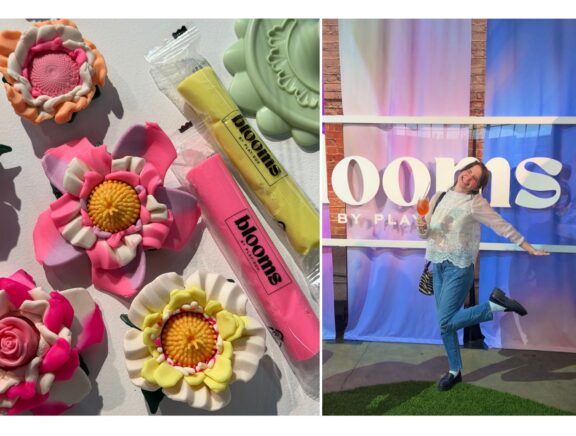
When I got the invite to the Play-Doh event, I anticipated that they would be debuting a “Play-Doh for Adults” product. Turns out Blooms is even cooler than I thought! Not only does the Blooms product look cool and go viral online, but it makes something really pretty! You load different colors of Play-Doh (also now updated to aesthetic tones rather than primary colors) into plastic cylinders with differently shaped holes on the sides. These plastic cylinders are stacked on top of one another. You then take a plunger to push the Play-Doh out through the differently shaped holes to make flower petals. Using a leaf-shaped plastic shape at the bottom of the cylinder tower, the petals are scraped up and together and secured in place to make a flower. It’s super cute!
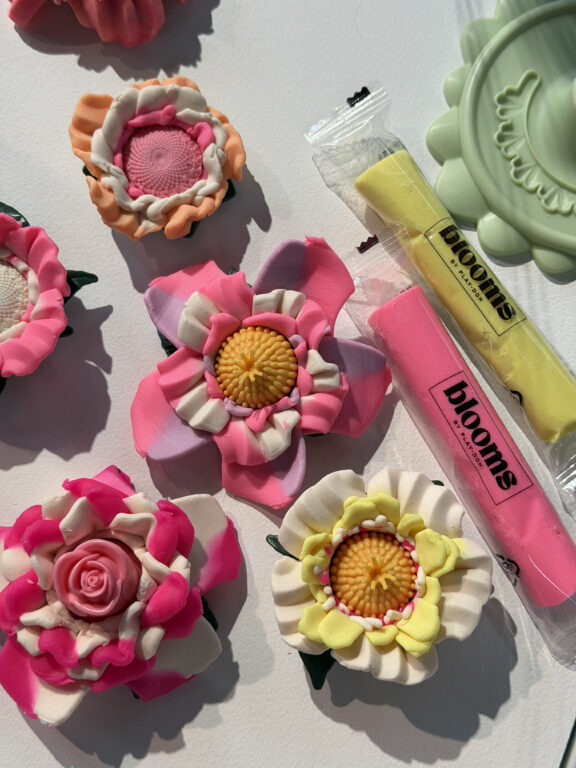
Throughout the event, we got to try out the new product while sipping cocktails and taking advantage of photo ops. We got to make floral arrangements using pre-made and dried flowers. I think that was the coolest part of the Play-Doh product. Handmaking a fun home good–flowers that won’t wilt–to not only beautify your adult home but be a fun conversational piece.
Blooms by Play-Doh feels like a particularly smart extension of a brand previously associated with preschool classrooms. It preserves the tactile, slightly silly satisfaction of playing with Play-Doh, but gives adults a different reason to participate: you’re making something attractive enough to display in your home.
That’s an important distinction. The nostalgia gets someone interested, but the finished object helps give the activity adult relevance. You’re not simply buying Play-Doh because you miss being six. You’re spending an evening making flowers with friends, sipping a cocktail and going home with something you created.
Would you Crayola your pickup?
Crayola takes the idea even further. The product doesn’t have to be a crayon at all. What Crayola owns is color, creativity and an enormous reservoir of childhood recognition. A collaboration with Slate lets adults use that identity in an entirely different category.
The second event I attended was a collaboration between Slate Auto and Crayola. Even as a crafty girl, I don’t use crayons regularly. Slate Auto advertises itself as “The Most Affordable Truck in America” on the landing page of its website. They offer a customizable pickup truck frame with a la carte add-ons to turn the car into an SUV with colorful wraps or open-back options. The collab with Crayola focused on the unique wrap colors that were Crayola inspired. They offer limited-edition wraps, matching decals, and unique key fobs.
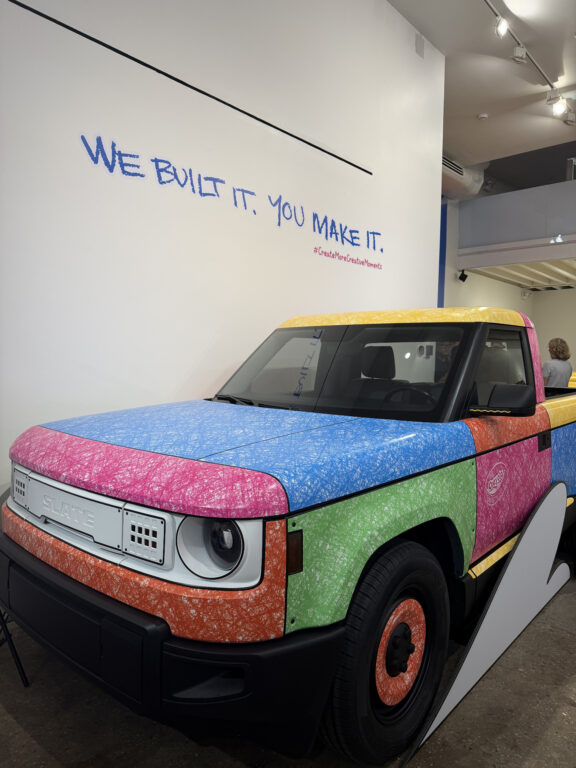
As a New Yorker, I’m certainly not their target customer for a pickup truck. But that’s almost beside the point. The collaboration demonstrates how far a childhood creative brand can stretch when customers aren’t simply buying the original product — they’re buying the feeling and identity associated with the brand.
Crafting, creativity, and play has been associated with children for so long, and in the age of AI and corporate burnout, my generation of 20-30-somethings have been looking for more opportunities to get offline and celebrate their “inner child.” By embracing the nostalgia of these childhood brands in combination with the satisfaction of an end product you can actually use, LEGO and Play-Doh show they have the ability to reach customers of all ages.
So what does this mean for the craft industry?
We already sell exactly what these enormous brands are trying to manufacture: tactile creativity, time away from screens, self-expression, accomplishment and community.
But we don’t always market those things.
If you want to reach younger adults, consider what happens when you stop presenting crafting primarily as a skill to master or a tradition to preserve and start presenting it as something they already want: a Friday-night activity with friends, an antidote to screen time, a way to personalize their apartment, a nostalgic throwback, a collectible obsession, or simply permission to play again.
That could mean a beginner-friendly make-and-take night with cocktails or mocktails. A project inspired by friendship bracelets, summer camp, ’90s color palettes or childhood cartoons. A collaboration with another nostalgic local brand. A kit designed around something customers will actually display, wear or share online. Or an event whose primary promise isn’t learn this technique but come make something cool with us.
LEGO, Play-Doh and Crayola aren’t trying to make adults feel childish. They’re making creativity feel like a desirable part of adult life.
For craft businesses trying to reach the next generation of customers, that’s the opportunity: don’t just sell them the craft. Sell them the feeling they came looking for.